


Can Mental Health Issues Cause Relationship Problems? And What Can You Do About It?
By Vee Vinci | Not Your Average Counsellor
Can love survive when mental health challenges are in the mix? This blog explores how anxiety, depression, trauma, and emotional burnout can quietly erode relationships—and what to do when your partner’s inner battles start affecting your connection. Learn where support ends, enabling begins, and how to protect your own wellbeing without giving up on someone you care about.
Relationships don’t exist in a vacuum. They’re shaped by how we feel, think, cope, and connect—and that means our mental health plays a massive role in how we show up with our partners.
Lately, I’ve been hearing this question more and more:
Can relationship problems be caused by individual mental health issues?
Short answer? Yes, absolutely. But the longer answer is more nuanced—and maybe even more hopeful than you think.
When Mental Health Hides Behind Relationship Issues
In therapy, I often see couples grappling with distance, disconnection, or conflict. On the surface, it might look like poor communication, mismatched needs, or personality clashes.
But dig deeper, and you’ll often find anxiety, depression, trauma, or burnout quietly shaping the dynamic.
What looks like controlling behaviour could actually be a fear response. What feels like disinterest might be emotional numbness. What you think is moodiness could be trauma reactivity.
And if we don’t name what’s really going on, we can’t address it.
Let’s break it down.
How Mental Health Struggles Show Up in Relationships
Depression
Depression can feel like your partner has emotionally disappeared. They’re there—but not really there. You might feel them pulling away, assuming they’re losing interest. But often, they’re simply overwhelmed and numbed out.
Even small things—like starting a conversation or showing affection—can feel too hard when someone’s in the fog of depression.
Anxiety
Anxiety isn’t just about worry—it can hijack a relationship. It might look like clinginess, overthinking, or constant reassurance-seeking. But underneath? It’s fear. Fear of being left. Fear of not being good enough.
It’s not always about a lack of trust in you—it’s often about a lack of safety within them.
PTSD and Trauma
Unhealed trauma can make intimacy feel unsafe. A partner might shut down when emotions get intense—or explode when triggered, seemingly out of nowhere.
This isn’t about being “too sensitive.” It’s the nervous system on high alert. To someone with trauma, closeness might feel threatening, even when everything is fine.
Personality Disorders or Traits
Conditions like Borderline Personality Disorder (BPD) or narcissistic traits bring their own patterns—emotional highs and lows, fear of abandonment, defensiveness, or lack of accountability.
These aren’t just “difficult personalities.” They often reflect years of unprocessed pain and survival strategies.
Is Mental Health at the Root of Your Relationship Problems?
Here are a few red flags that suggest something deeper might be at play:
You feel emotionally drained, confused, or invisible You might be carrying the emotional weight of the relationship—managing moods, initiating connection, keeping the peace—while your own needs get sidelined.
There’s constant conflict—or total emotional silence Small things blow up. Or maybe there’s just… nothing. That emotional void or volatility often signals more than miscommunication.
You’re walking on eggshells You second-guess everything. You brace for the next emotional storm. This isn’t love—it’s survival mode.
You're always the one doing the emotional labour Planning, supporting, problem-solving—it’s all on you. That imbalance might be less about effort and more about capacity.
You’re stuck in a loop, and nothing’s changing If you’ve had the same conversation over and over, tried everything you can—and it still feels like groundhog day—mental health might be the missing piece.
Support vs. Enabling: Where’s the Line?
This part is tricky—because when someone you love is struggling, your instinct is to help.
But there’s a big difference between supporting someone and enabling them.
Support sounds like: “I love you. I see you’re struggling. I want to be here—but I also need honesty, effort, and respect.”
Enabling sounds like: “I’ll tolerate the emotional chaos, broken promises, or hurtful behaviour because I feel guilty or scared to speak up.”
One keeps the relationship grounded in care and boundaries. The other slowly erodes your self-worth.
How to Talk About Mental Health Without Shame or Blame
These conversations can feel awkward. You don’t want to offend them or come across as diagnosing them. So you stay quiet.
But silence doesn’t help. It just creates more distance.
Here’s how to open the conversation gently:
“I’ve noticed things feel different lately, and I’m wondering if you’re okay.”
“I’m not judging—I’m just trying to understand.”
“Your mental health matters. And so does mine.”
Speak from your own experience. Stay in your lane. Keep the tone soft and curious—not confrontational. You’re not accusing—you’re inviting connection.
But What If They Refuse to Get Help?
One of the hardest things is loving someone who won’t help themselves.
You suggest therapy. You try to support them. You give it time. But they deny, deflect, or get defensive.
Meanwhile—you’re stuck holding the emotional weight for two.
You might need to ask yourself honestly:
How much of my wellbeing am I willing to sacrifice while they avoid getting help?
This isn’t about giving up on them. It’s about accepting that you can’t do it all. Love doesn’t mean staying in harm’s way.
Sometimes therapy isn’t just a good idea—it’s necessary. And no, it’s not a magic fix. But it’s a start. And if they’re not open to change? That tells you something important too.
Don’t Lose Yourself in the Process
Being with someone who’s mentally unwell can consume you. You start revolving your life around their moods, their triggers, their needs.
And bit by bit, you disappear.
Here’s your reminder: You matter too.
You need time to rest, feel, and process your own emotions. You can’t pour from an empty cup. You can’t stay strong for someone else if you're falling apart inside.
Self-care isn’t selfish—it’s how you survive.
When Love Isn’t Enough
Sometimes the hardest truth is this: Love alone isn’t enough to keep a relationship healthy.
Especially when one partner refuses to get help, avoids accountability, or causes ongoing emotional harm.
Choosing yourself doesn’t mean you didn’t love them enough. It means you finally loved yourself enough too.
Closing Thoughts
Mental health and relationships are deeply connected. And when one partner is struggling, the whole dynamic can suffer.
But with honesty, support, and clear boundaries, change is possible.
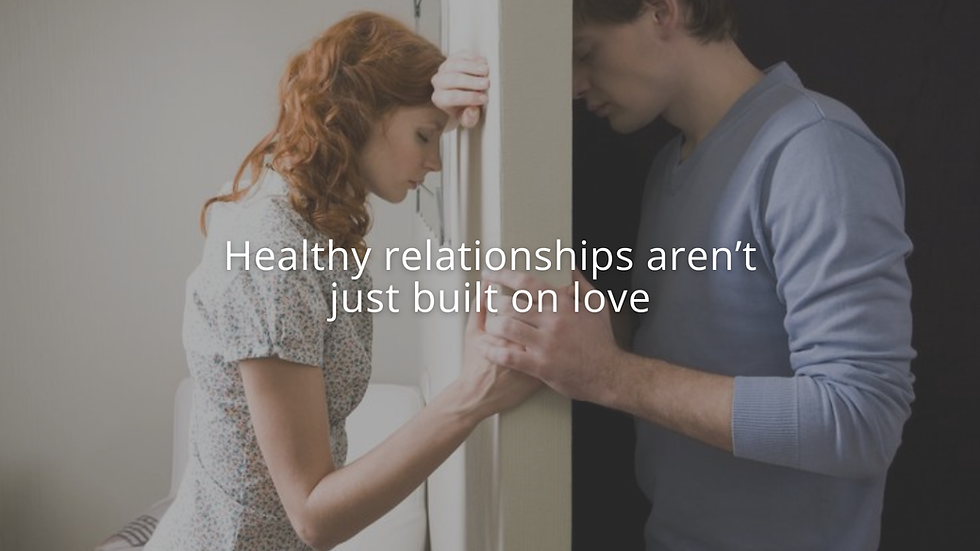
Just remember: You’re not there to rescue. You’re there to relate. Healthy relationships aren’t just built on love—they’re built on emotional responsibility, from both sides.
Need support? If you're unsure about your relationship or need help unpacking your experience, you're not alone. At HeadQuarters Counselling Services, we offer a safe, grounded space to help you make sense of what’s going on—and decide what’s next.
Vee Vinci is the CEO of HeadQuarters Counselling Services, offering honest, grounded support around relationships, emotional growth, and life’s big questions. For more real conversations that challenge and connect, visit our website or tune in to the Not Your Average Counsellor podcast.


Comments